



BD1
BD1 is the first bromodomain of BET proteins, whose two tandem bromodomains enable chromatin binding to facilitate transcription[1]. Mechanistically, BET proteins recognize acetylated histones and recruit transcription factors and P-TEFb to chromatin, promoting RNA polymerase II phosphorylation and transcription initiation and elongation[2]. In cancer and immunoinflammation models, steady-state gene expression primarily requires BD1, whereas inflammatory stimulus-induced rapid gene expression requires both BD1 and BD2[1]. Compared with BD2, BD1 therefore provides a stronger experimental handle for studying transcriptional maintenance and cancer-model responses, because BD1 inhibitors phenocopied pan-BET inhibitors in cancer models[1]. For research applications, JQ1 and I-BET established acetyl-lysine/bromodomain inhibition as chemical-probe strategies, while GSK789 and Olinone support domain-selective interrogation of BET-BD1 biology[3][4][5][6]. - BD1 supports steady-state transcription and chromatin engagement across BET protein research models. - BD1-selective inhibitors help separate cancer-model effects from BD2-linked inflammatory responses.
References:
- [1]. Gilan O, et al. Selective targeting of BD1 and BD2 of the BET proteins in cancer and immunoinflammation. Science. 2020 Apr 24;368(6489):387-394. [Content Brief]
- [2]. Wang N, et al. The BET family in immunity and disease. Signal Transduct Target Ther. 2021 Jan 19;6(1):23. [Content Brief]
- [3]. Filippakopoulos P, et al. Selective inhibition of BET bromodomains. Nature. 2010 Dec 23;468(7327):1067-73. [Content Brief]
- [4]. Nicodeme E, et al. Suppression of inflammation by a synthetic histone mimic. Nature. 2010 Dec 23;468(7327):1119-23. [Content Brief]
- [5]. Watson RJ, et al. GSK789: A Selective Inhibitor of the First Bromodomains (BD1) of the Bromo and Extra Terminal Domain (BET) Proteins. J Med Chem. 2020 Sep 10;63(17):9045-9069. [Content Brief]
- [6]. Gacias M, et al. Selective chemical modulation of gene transcription favors oligodendrocyte lineage progression. Chem Biol. 2014 Jul 17;21(7):841-854. [Content Brief]
All Product Categories
-
BD1 Related Products (9)
Related Products (9)

-
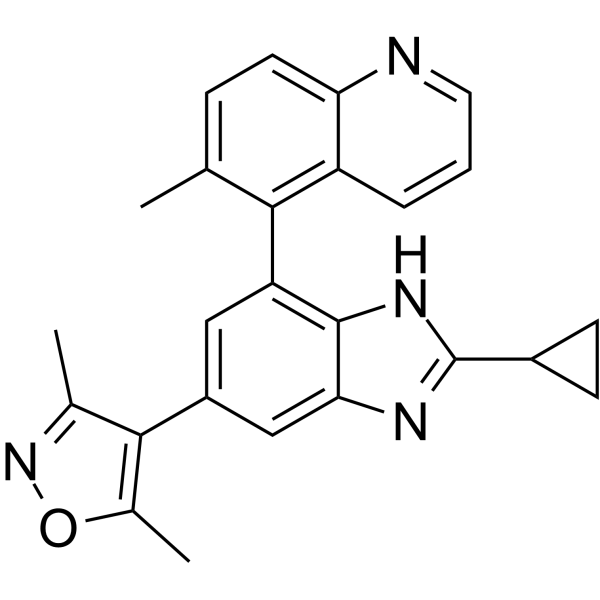
BRD4-BD1/2-IN-3
 0 ImagesBRD4-BD1/2-IN-3 (Compound B6) is a selective BRD4 BD2 inhibitor with an IC50 of 0.41 nM for BRD4 BD2 over BRD4 BD1. BRD4-BD1/2-IN-3 significantly inhibits the LPS (HY-D1056)-induced expression of IL-6. BRD4-BD1/2-IN-3 shows anti-inflammatory activities by modulating the TNF and NF-κB signaling pathway. BRD4-BD1/2-IN-3 can be used for inflammatory diseases research.
-
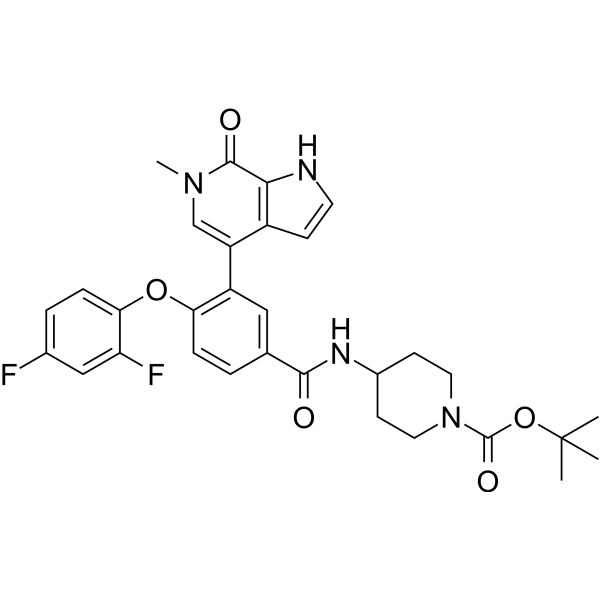
SDR-04
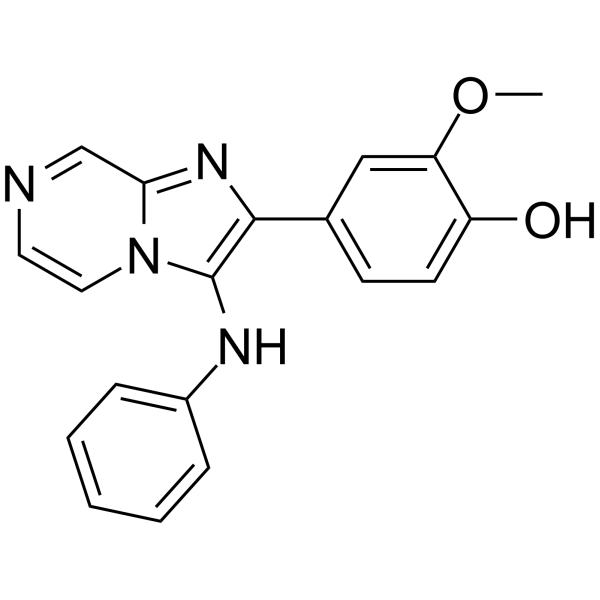 0 ImagesCat. No.: HY-146741CAS No.: 879593-54-1

-
SRX3212
 0 ImagesCat. No.: HY-183922CAS No.: 2735720-80-4SRX3212 is a potent PI3Kα/BRD4 inhibitor with human IC50 values of 22 nM, 3.7 nM, and 32 nM for PI3Kα, BRD4BD1, and BRD4BD2, respectively. SRX3212 inhibits PI3K kinase activity and blocks acetyllysine binding function of BRD4BD1 and BRD4BD2. SRX3212 can be used for the research of mantle cell lymphoma, colon carcinoma, neuroblastoma, prostate cancer[1].
-
CDK4/6/BRD4-IN-1
 0 ImagesCat. No.: HY-173237CDK4/6/BRD4-IN-1 (B15) is an inhibitor of CDK4, CDK6 and BRD4, with IC50 values of 220 nM, 146 nM, 106 nM and 85 nM for BRD4-BD2, BRD4-BD1, CDK6 and CDK4, respectively. CDK4/6/BRD4-IN-1 (B15) can be used in the study of NSCLC (Non-Small Cell Lung Cancer). CDK4/6/BRD4-IN-1 (B15) induces cell cycle arrest and apoptosis.
-
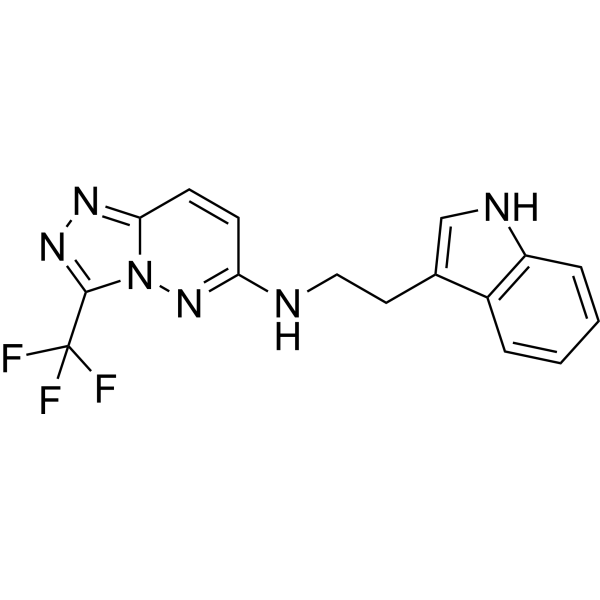
BRD4 Inhibitor-19
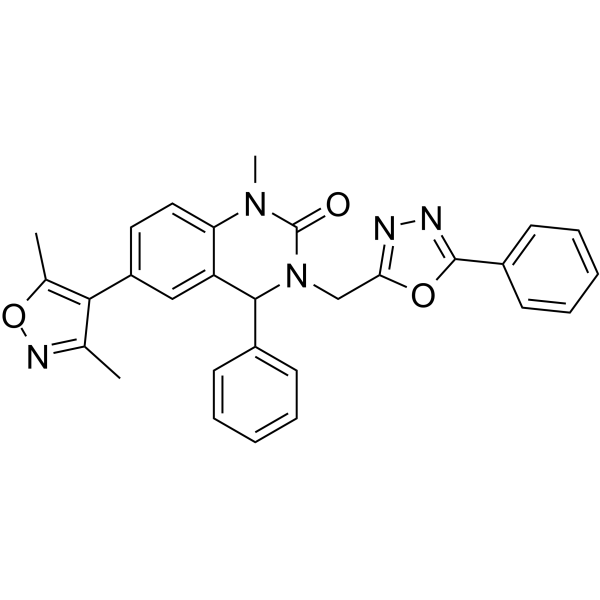 0 ImagesCat. No.: HY-146739CAS No.: 2757865-63-5BRD4 Inhibitor-19 is a BET inhibitor with an IC50 of 55 nM for BRD4-BD1. BRD4 Inhibitor-19 can be used for multiple myeloma research.



